
Students Haven’t Stopped Learning.
They’ve Stopped Connecting With Passive Learning.
Why has online learning so often replicated the least engaging parts of traditional classroom learning?
- long lectures
- static lesson content with at most a few included images
- a one-size-fits all learning styles (listen to the lecture then answer questions)
During the pandemic, schools learned an important lesson:
Students engage most deeply when learning is interactive, visual, experiential, and connected to real outcomes
Dunwoody Immersive was built from those lessons—not from outdated assumptions about how students learn best.
College-Level Learning Built Like Modern Media
High School students will spend hours mastering difficult concepts, actively connecting with others, and learning new skills.
It’s just that they’re mostly doing that online and outside of school: playing open-world video games, editing video and audio content to share, spending time in Discord servers, and watching instructional videos or detailed breakdowns of their favorite sports and culture figures on YouTube.
Dunwoody Immersive approaches them in a way that feels familiar.
Instead of memorizing concepts from a textbook, students enter immersive environments where they build electrical systems, explore global architecture, solve real-world challenges, and connect classroom learning to modern careers.
Every course is designed to feel active, visual, and purpose-driven—combining academic rigor with the kinds of interactive experiences students naturally gravitate toward outside school.
The Dunwoody Immersive approach
Story-driven lessons available in
Narrative has long been a part of learning. However, new technologies means that students don’t just passively listen to a story. They explore it and experience every aspect of it with the main storyline serving as their guide and the details reinforcing and adding depth to their learning.
VR labs
The lab assignments for Dunwoody Immersive courses are available for Meta Quest headsets. They currently provide the best experience to cost ratio.
The VR experience also means students can practice, make mistakes, and repeat exercises in a controlled and safe environment.
with flexible online access
Courses can be taken anywhere with internet access via Canvas, Dunwoody’s Learning Management System. Courses are 14 – 16 weeks, self-paced, and led by Dunwoody provided instructors.
earning dual enrollment credit
Dunwoody Immersive courses count the same as any other dual enrollment option: students earn credit towards their high school degree, while also earning college credit that may be transferred into their post-secondary degree program.
that leads to career pathways
Dunwoody has found that students are more willing to put in the work to learn when they understand that their coursework is leading to concrete outcomes: specifically, to a career pathway they’re interested in. Dunwoody Immersive courses clearly feed into relevant, technical careers.
Dunwoody Immersive Course Examples
ELTT1101: DC Circuit Fundamentals
Experience Type
Hands-On VR Challenges
Dual Credit
HS + College Hours (4 Credits)
Curious how Direct Current (DC) Circuits are used to power everything from smartphones to electric vehicles? Use the tools of a professional technician to see electricity in action.
- Master Ohm’s Law, Kirchhoff’s Laws, and circuit analysis through gamified challenges
- Learn with measurement tools, resistors, diodes, and zener diodes in a VR Environment
- Weekly “DC Drives Innovation” segments feature real electrical professionals in a variety of careers
Degree Pathways: Electrical Engineering, Electronics, Electrical Construction, Automation & Robotics
Career Exploration: Electrical Engineering, Electrical Construction, Renewable Energy, Robotics, Automotive Tech
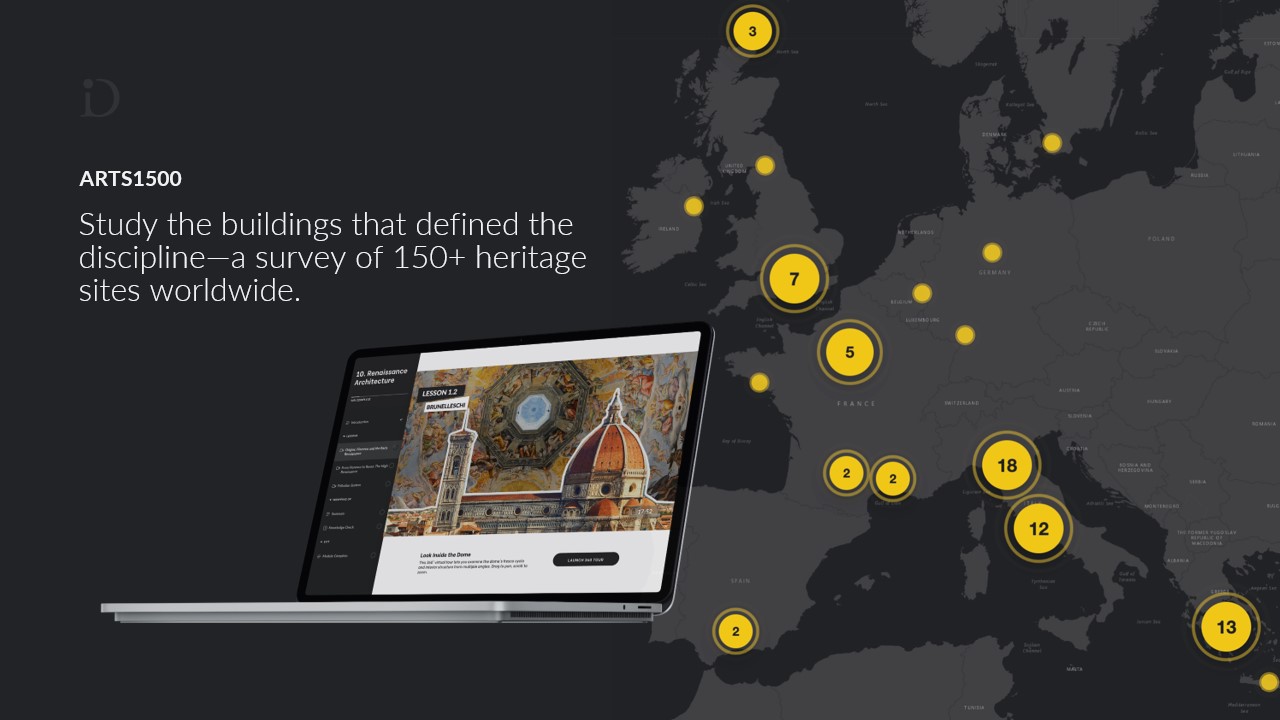
ARTS1500: Early Global Architecture
Experience Type
Augmented Site Exploration
Dual Credit
HS + College Hours (3 Credits)
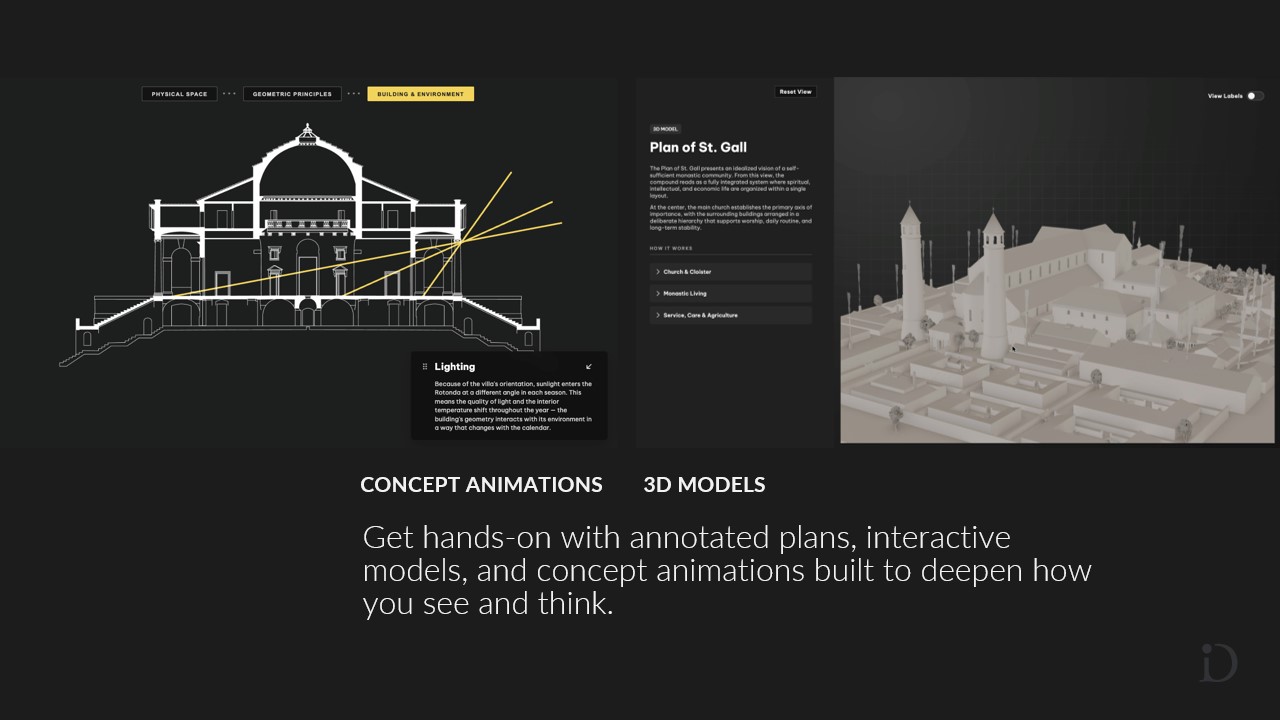
Research and analyze architecture of the world throughout history and the factors that shape the built environment. Understanding how the built world came to be — and where it’s going.
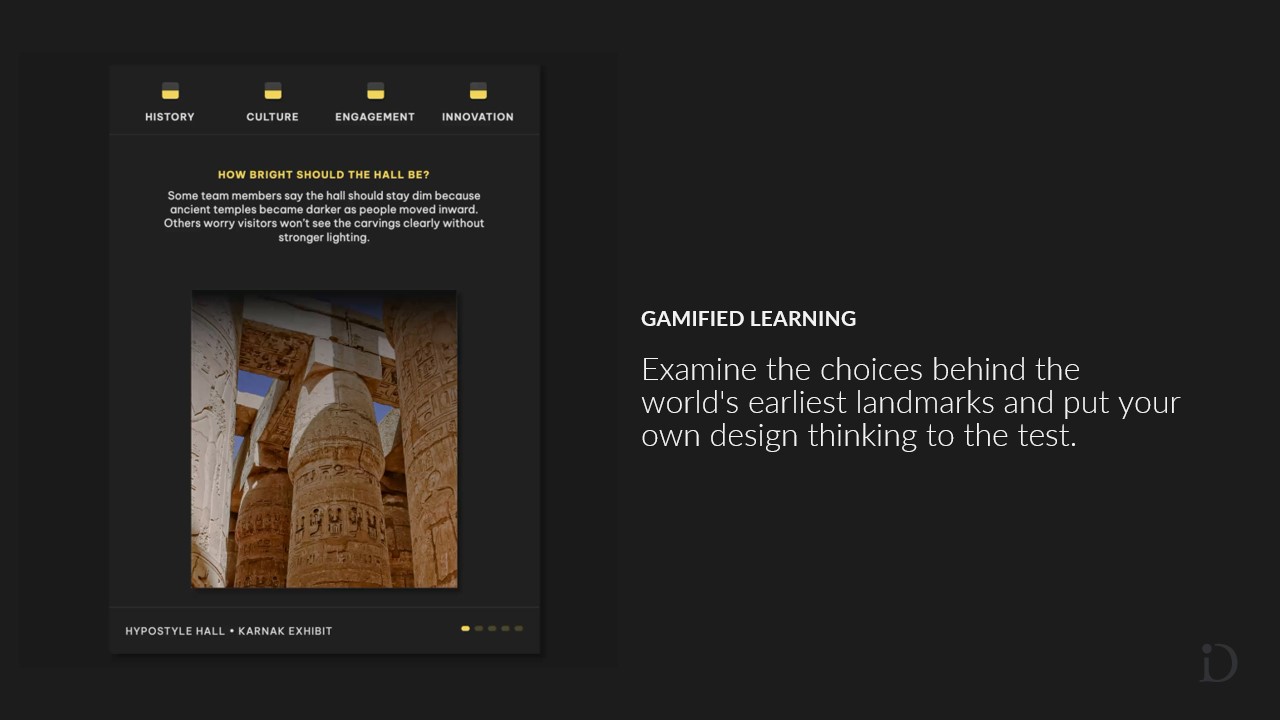
- Travel virtually to places like Ancient Egypt and Renaissance Europe as you learn to recognize, analyze, and sketch the world’s most influential architectural works
- Decode how culture, politics, technology, geography, and social equity shape buildings and civilizations
- Compare global design traditions, materials, and construction methods to understand how they shape the built environment
Degree Pathways: Architecture, Interior Architecture, Construction Management, Cultural Studies
Career Exploration: Architecture, Urban Planning, Historic Preservation, Museum Curation
Course Content Example: ARTS 1500
We welcome partnerships
For Schools & Districts
Add a powerful educational option to your offerings.
Are you ready to partner with Dunwoody to build the future of workforce education?
For Donors & Industry Partners
We can’t be complacent about the need for skilled workers.
Are you ready help us expand opportunity and strengthen the future of industry?