
Ready for more detail? Explore degree requirements, course descriptions, and program outcomes for Experiential Graphic Design in the College Catalog. You can also find a sample academic plan for each semester of your college journey.
New program; first graduates Spring 2030
Experiential Graphic Design
Become a design professional with a focus on visual storytelling, including environmental graphics, wayfinding, exhibitions, and other installations.
50k
Average Salary for School of Design graduates
Source 2023-24 Dunwoody Career Services Annual Report
Dunwoody College’s degree in Experiential Graphic Design
Graphic design is all about communication and storytelling, and Dunwoody’s Bachelor of Science in Experiential Graphic Design opens that up into physical and virtual spaces beyond the page and screen.
With an experiential design degree or visual communication degree, you’re positioned for careers across a variety of industries with a focus on the design and fabrication of permanent and temporary design applications, including trade exhibits, retail displays, museum attractions, hospitality interactions, wayfinding, and digital and motion design.
Dunwoody’s degree is for those interested in how people interact with various environments and how to create experiences that convey feeling and clearly communicate with the users who interact with those environments.
Coursework combines foundational design principles and processes with project-based learning, so you can create compelling visual communications no matter the space, client, user, or experience.
You’ll learn use industry standard software, including Adobe Creative Suite and various CAD (computer-aided design) and 3D modeling programs, to complete projects across a variety of modes and experiences, including virtual, multimedia, display, UX/UI, and exhibition.
An emphasis is placed on sustainable design, along with utilizing standards that protect the health, safety, and well-being of stakeholders.
You will also build a portfolio of work throughout your studies and complete a capstone project that demonstrates your skills in the field of Experiential Graphic Design.
Experiential Design Degree Class Topics
- Typography
- Design Principles and Systems
- 2D Design
- 3D Design, including specific courses in lighting and surface design
- 4D Design, including a studio in exhibits
- UX/UI Design
- Production Design, including a specific course on packaging
Common Job Titles in Experiential Design and Visual Communication
- Environmental Graphic Designer
- Graphic Designer
- 3D Designer
- Experiential Designer
- Wayfinding Designer – Multi-Market
- Set Designer
- Multimedia Designer
- Visual Designer
Student orgs
Opportunities to get involved outside of the classroom include:
- Professional Association for Design (AIGA)
- Phi Theta Kappa Honor Society (PTK)
- Student Government Association (SGA)
Facilities
Fabrication Lab
The Fabrication Lab is a place to get hands on experience with materials and tools for building three dimensional objects. Bring your designs to life as you work with wood, plastic, metal, cardboard and more.
- Laser cutter- Requires DXF file
- CNC Router- Requires DXF or STL file
- 3D printer- Requires STL file
- CAD table
- Band saw
- Drill press
- Spray booth
- Hot wire cutter
- Hand drills
- Saws- jigsaw, Sawzall, track saw, hand saws
- Chisels
- Soldering iron
- Many hand tools
Design Studios
Work in open concept studio spaces designed to foster collaboration and learning with students in the School of Design.
- Individual work spaces
- Drafting kits
- Physical modeling kits
- Wall and table spaces for displaying/reviewing designs
Printing, Finishing, and Packaging Lab
Bring digital designs to life by printing different types of projects on a wide variety of substrates. Learn quality control of print projects and various finishing techniques.
- Digital press
- Wide format printer
- Spectrodensitometer
- Spectrophotometer
School of Design Faculty

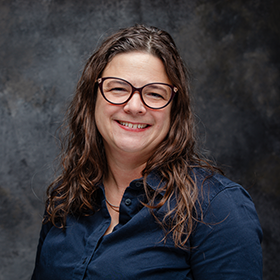
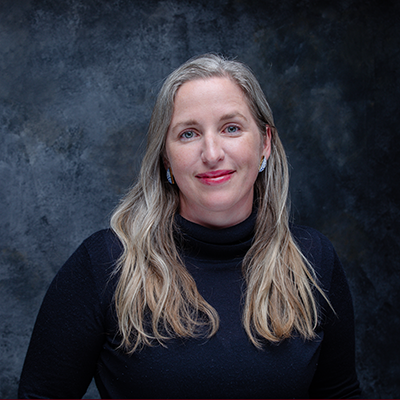
Minneapolis-based artist and educator, Korrin Howard, is the Associate Dean of the School of Design at Dunwoody College of Technology. Korrin is driven by both inspiring students to find their voice in the design profession and creating positive change in the educational landscape. She finds energy in creating space for community, generating ideas, and empowering the next leaders of the design field.
Korrin has a background in interior design, industrial design, and sustainable architecture, and she uses this background to bring a unique perspective to her work with students, faculty, and industry partners. Her 20+ years of teaching experience has provided the opportunity to work with a multitude of students from a variety of backgrounds and encourage them to pursue their passions.
Jess teaches interior design studios and the architecture history sequence. She was awarded the 2019 Dunwoody Teacher of the Year award because of her ability to ignite passion for design in her students. When not in the classroom, she leads assessment and accreditation for the School of Design and mentors new faculty. She earned her Bachelor of Art with a major in Architecture with a minor concentration in American Indian Art and her Master of Architecture from the University of Minnesota.
Beata Fleischmann has been a design instructor in higher education since 2005. She focuses on combining concept methodology with strong technological skills. Her varied background in Textile Design, Painting, Sculpture, Interior Design, Ecological Architecture, and Furniture Design has helped her to foster a sense of curiosity and exploration. She aspires to have her students develop this same curiosity and cross-disciplinary exploration as they solve design problems. In the classroom, Beata encourages her students to become keen observers and questioners.
Beata is passionate about creating equitable access to learning for students from varied backgrounds. Therefore, she enjoys the role she plays with helping to plan and coordinate the online learning environment. She has received the Outstanding Academic Innovation Award for her work within the B.Arch Online Program.
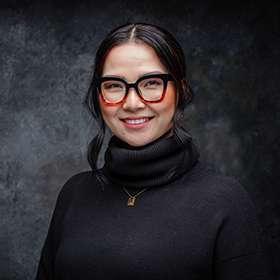

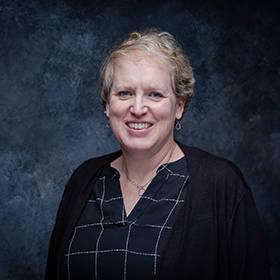
Twee Andersen is an interior designer and design educator with a passion for creating thoughtful, impactful spaces. She holds a BA in Psychology from the University of Minnesota and a BS in Interior Design from Dunwoody College of Technology. Twee combines her expertise in psychology with her design skills to emphasize social, emotional, and physical well-being in her work, specializing in hospitality projects.
Dedicated to mentorship and fostering future talent, Twee actively engages in mentorship and portfolio reviews at local colleges.
Andrew Blaisdell is an Architect with a background in prefab modern, historic restoration, relief housing, and urban planning. He is the founder of Studio Andhow, an Assistant Professor at Dunwoody College, and has taught studios, seminars, and workshops at the University of Minnesota, where he received a Master of Architecture degree in 2010.
Pam is a versatile professional skilled in creative strategy, education, design, and visual arts. Her expertise spans publication design, identity design, and retail product packaging. Pam is committed to guiding aspiring designers towards success. As both a mentor and educator, she prioritizes the mastery of technical skills while supporting individual and collaborative creativity. Pam holds a BA in studio art/k-12 art education and an MFA in Graphic Design. She remains actively engaged in design practice as a co-owner of a local design studio, ensuring she continues to evolve within the field.


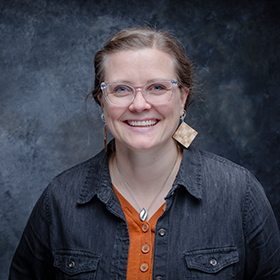
Claire Huffaker is an educator and designer. Working at the intersection of design and wellness, she explores human wellbeing and humanity through integrative research, design, and visualization practices. She earned her Master of Architecture from Kansas State University and holds a certification in User Experience Design. Claire is a Senior Instructor in the School of Design, where she is committed to fostering an educational landscape that empowers students to pursue their passions with confidence and curiosity.
Lisa Loudon is a visual artist and educator with an MFA from the University of Nebraska in Visual Art with an emphasis in painting and drawing. She has over 20 years of teaching experience at the college level. Her work has been exhibited nationally, and she is the recipient of several grants and awards. She maintains an active studio practice. Lisa brings a focus on creativity and conceptual thinking to the classroom, while also helping students to build foundational rendering and presentation skills.
Erin is a designer, fabricator, maker, and thinker. She is passionate about the intersection of design and fabrication. She loves teaching students about new materials, tools and processes and helping them gain comfort using their hands and making things. Erin earned her BFA in Furniture Design from Minneapolis College of Art and Design and a Masters of Arts Management from Columbia College Chicago.
In addition to managing the FabLab, Erin teaches in the School of Design and is the co-owner of Tandem Made, a furniture and product design company.
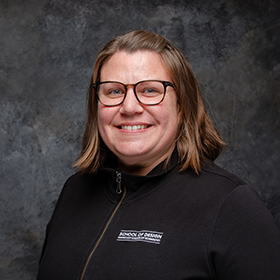

Sarah is a sustainable creative, educator, interior designer, and systems thinker. She enjoys seeing SoD students develop evidence-based and creative thinking design solutions that also meet our changing climate needs. She earned her Bachelors of Science in Interior Design from the Arts Institutes International Minnesota and a Masters of Arts in Sustainable Design from the Minneapolis College of Art and Design. Sarah teaches in the School of Design and is also the owner of Studio North Design Co, a sustainable design consulting firm.
James is an educator and community designer. He is the co-founder of the design collaborative Public Design Exchange with work that focuses on public art, design, engagement, fabrication, planning, and installation. He holds a Bachelor of Science and Master of Architecture from the University of Minnesota and later served as a Lecturer in Architecture and Landscape Architecture following five years working in community design on the Mississippi Gulf Coast post-Hurricane Katrina. His teaching and practice place an emphasis on collaboration, empathy, partnership, and equity building focused on fulfilling the promise of the core values of Dunwoody and supporting students to be ready for the realities of practice and be best prepared to serve clients, collaborators, and communities.