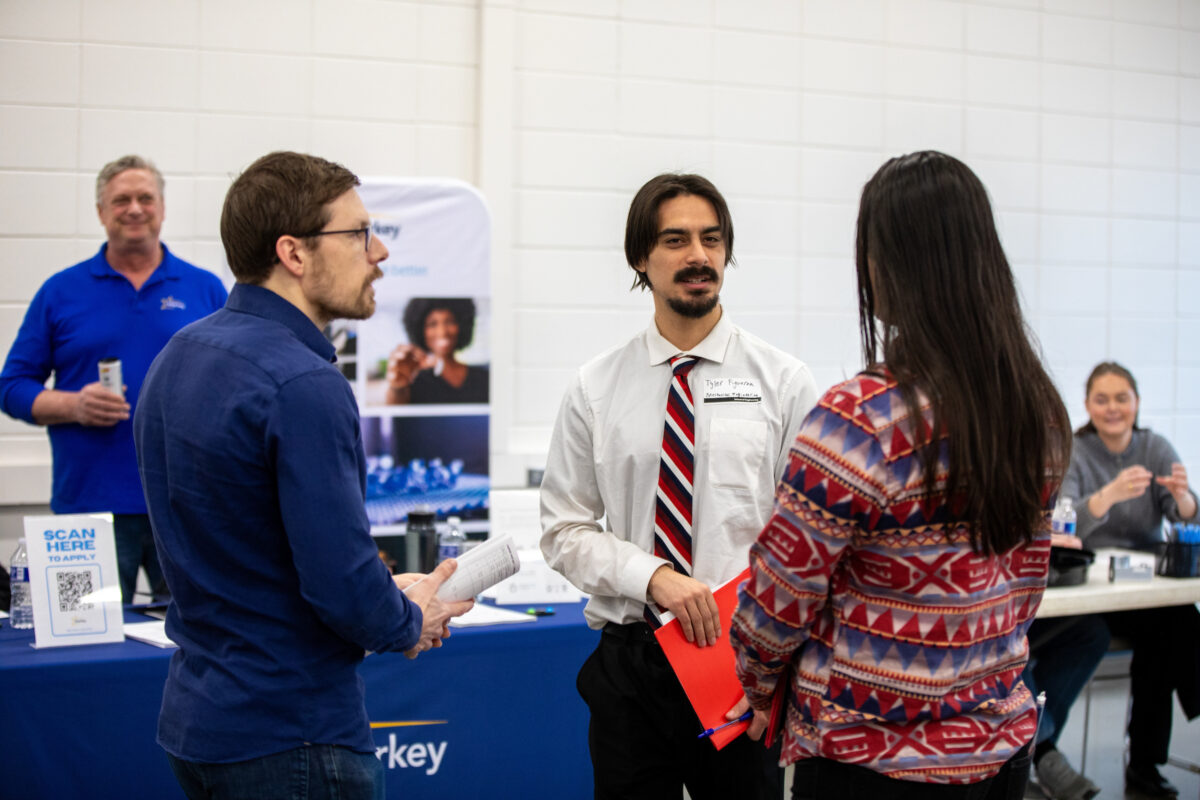
A career fair is coming up. You have the basics down: you’ve worked with your college’s career services resource to update your resume and printed out copies of it to share. You have an outfit picked out that’s not too dressed up but also not too dressed down. You know how to offer a firm handshake and make eye contact. And maybe you’ve even written and memorized a couple of sentences about who you are, what you’ve studied, and what kind of career you’d like to pursue.
What else should you do if you’re a student in a STEM, design, or technical major?
Although there’s nothing wrong with just sticking with who you are and what you’ve studied, it can be helpful when having conversations to reference more than just you.
Here’s are some tips on how to do that.
General Knowledge about the Industry
The company reps you speak to at a career fair won’t expect you to know everything about the industry. But it’s a good idea to be aware of something major that has recently happened in the industry: a breakthrough technological innovation, a merger between two of the largest companies, a cool new product has just been announced, etc.
Sources for these could include:
- Industry news sites
- An example for computer students: TechCrunch
- Industry organizations
- An example for architecture students: American Institute of Architects (AIA)
- Podcasts and video content
- An example for automotive students: Automotive News podcasts
Depending on the industry, you might also want to think about who your favorite important innovators and leading figures are.
For example, if you are studying to become a graphic, product, or interior designer, which designers or design movements inspire you?
If you are an engineer, which engineers past or present do you admire?
It can also be useful to be able to reference major players in your industry.
If you are in an automotive program, do you know at least a little bit about the major automotive manufacturers, both domestic and foreign?
If you are looking for a job in precision manufacturing, are you aware of the main brands for CNC machines and 3D printers?
Even if you have already gone over that information in class, a brief refresher the day before the career fair is a good idea.
Specific Knowledge about the Companies at the Career Fair
Awareness of the companies you’ll be talking to is even more important than broad knowledge about your industry.
Study the list of companies attending the career Fair to find ones that would be a good fit for your career goals and technical skills.
Rank them in the order of which ones you most want to talk to.
Then do some research on them.
Likely, the fastest way to do that research is go to their website and take a quick look at what they do and how they represent themselves and any major new products and projects from the past year. Start with their home page, then check their “about” or “mission” pages. If they have a company history page or newsroom, take a look at those as well.
They may also have a hiring page that provides some clues to the kind of employees they are looking for.
As you explore the company’s website, make sure you jot down a few notes that you can reference right before you stop by their table or booth at the career fair.
If you really want to impress, come up with two or three questions you’d like to ask the representatives.
It could be as general as asking a construction company: what is the most interesting project you are currently building?
Or as specific as asking a large engineering firm: which divisions in your company are hiring the most engineers right now?
With your questions, it’s fine to jot them down on a notepad or note card. If you need to reference it while you’re talking to a company’s representatives, it just shows that you planned ahead.
Although it can be nerve-wracking approaching people you don’t know, the better prepared you are to talk about yourself, the companies you want to connect with, and anything new going on in the industry, the more likely you are to be able to have a good conversation with the company’s representatives at the career fair.
Dunwoody College students and Career Fairs
This advice is especially relevant for students at Dunwoody College of Technology because they start attending career fairs their first semester on campus.
If you’re a first or second semester student, you may not be ready to have an in-depth conversation about your career goals and technical skills and how those fit with the company you’re talking to. But with a bit of preparation, you can still have a brief, good conversation and both provide a good first impression and get a sense of how interested you are in pursuing employment at that company.