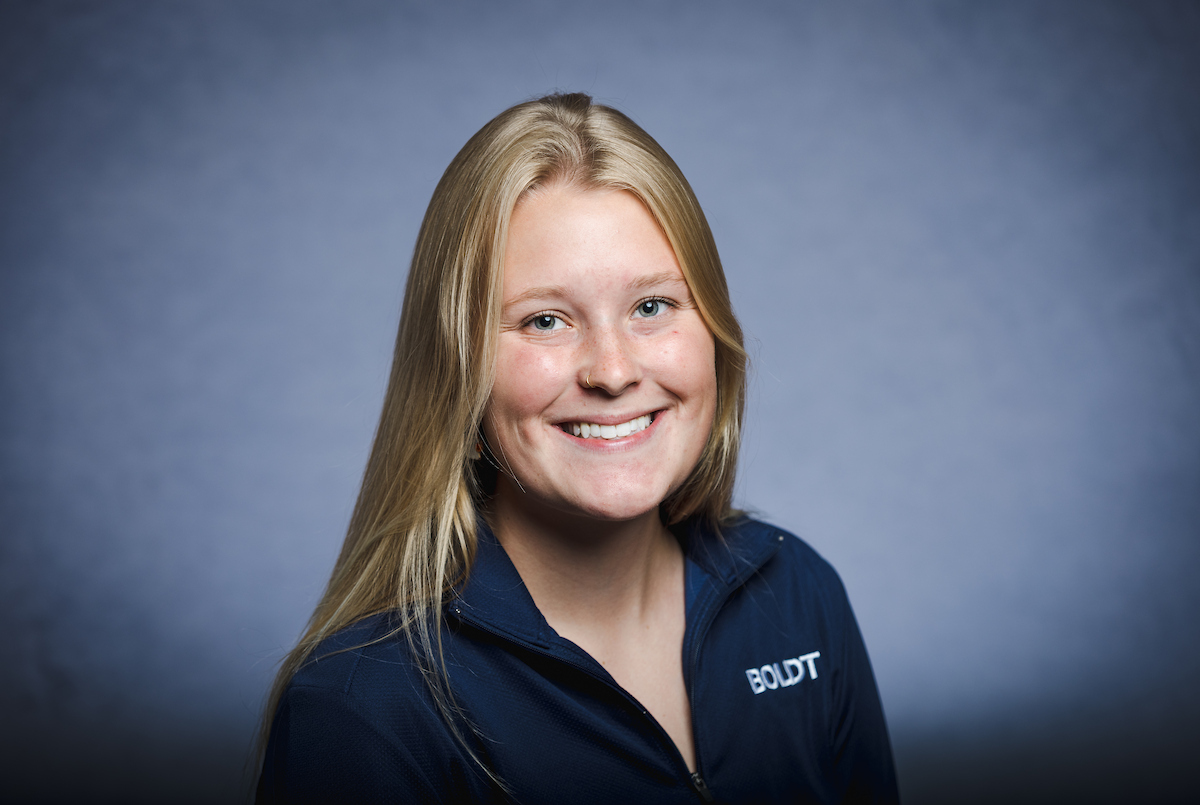
Q&A with Dunwoody Alum Abigail Jorgensen
In recognition of National Women in Construction Week, we are proud to highlight Dunwoody alum Abigail Jorgensen, an Assistant Project Manager at Boldt, President of the National Association for Women in Construction (NAWIC) Minnesota chapter, and a leader helping pave the way for more women in the trades.
Jorgensen’s path to construction management was not a straight line, but it turned out to be the perfect fit. We spoke with her about finding her direction, navigating a traditionally male-dominated industry, and why construction offers endless opportunity.
What led you to Dunwoody and the Construction Management program?
I started at a different university studying biology, but I quickly realized it was not the right fit. I began talking to friends and exploring different career paths, and Dunwoody kept coming up in nearly every area I looked into because they offer so many programs.
I scheduled a tour and explored options like welding and automotive. After reviewing everything Dunwoody had to offer, I discovered the project management track in construction, and it just clicked. It aligned with my skillset and everything I wanted to do.
I was also looking for a fast-paced college environment where I could work with my hands. Dunwoody offered that balance of hands-on learning and practical experience that really appealed to me.
How did your career with Boldt begin?
Dunwoody played a big role in helping me make connections in the industry. Through the Construction Club and relationships with instructors, I was introduced to professionals and companies, including Boldt. The program’s strong industry ties and networking opportunities helped open doors and make that first step into the field feel natural.
I completed an internship with Boldt Construction while I was in school, which gave me hands-on experience and confirmed that I was on the right path. After graduating, I transitioned into a full-time role.
What were some of the biggest challenges you faced entering a traditionally male-dominated industry?
One of the biggest misconceptions is that the construction industry is not welcoming to women. In my experience, that has not been the case. The industry is changing, and many companies are intentional about creating inclusive, supportive environments.
The newer generation of tradespeople is especially accepting, and more women are entering the field every year. There are still occasional moments where someone may not be used to working with a woman, but those situations are becoming less common.
Overall, I have seen real progress. Construction is evolving, and it is encouraging to be part of an industry that recognizes the value women bring to the jobsite and to leadership roles.
Are there any other misconceptions that keep women from pursuing construction careers?
There is still a stereotype that construction is only for men or that women cannot handle the physical demands. Sometimes people discourage women from going into the trades.
In reality, construction is constantly evolving. Companies are focused on innovation and safety for everyone. On the jobsite I am currently on, no one is allowed to lift more than 40 pounds. That rule applies to everyone because all workers need to take care of their bodies.
The industry is becoming less physically taxing and more focused on smart processes and safety standards. Women in the field are largely respected, and more progress is being made every year.
Were there mentors or programs at Dunwoody that had a lasting impact on you?
Absolutely. I was involved in the Construction Club, which was a great way to connect with outside companies and gain exposure to the industry.
Dunwoody also has a group called Kate’s Club, which creates community and support for women across programs. The club even has a space on campus where women can gather, study and spend time together. That made a big difference in building connections and feeling supported while pursuing a career in the trades.
Through Dunwoody’s partnership with the National Association for Women in Construction, I was introduced to NAWIC early in my college experience. That introduction had a significant impact on me. The women involved in the association encouraged me to get involved, step outside my comfort zone, and take on leadership opportunities.
What would you say to other young women interested in construction careers?
The construction industry has endless opportunities in amazing, high-paying jobs.
If you are willing to work hard and stay curious, there is so much room to grow. Construction offers a wide range of career paths, from project management to field leadership and beyond. No two days are the same, and the work you do has a real, lasting impact.