Traditional pathways into careers in computing and Information Technology (IT) have included majoring in computer science for a general approach, software engineering if you want to focus on software development, or electrical engineering if you think you might want to get into hardware development.
Those are all valid paths, but we live and work in a world where computing devices are everywhere, from sitting in your pocket to embedded in your fridge. All of these devices are also connected to the Internet and some are increasingly driven by machine learning (AI). This makes integrating software and hardware more important than ever.
This is where majoring in Computer Engineering comes in.
Why study Computer Engineering?
Computer Engineering lies at the intersection between Electrical Engineering (which focuses on electronics) and Software Engineering (which focuses on code).
These days, even the smallest computing devices can run sophisticated software, and software that is specifically tailored to the device and its purpose is incredibly important to maximizing what the device can do.
Because of this convergence, those who understand both hardware and software are valuable to businesses and organizations looking to use the advancements in technology to solve problems that would have been either impossible or incredibly expensive just a decade ago.
But also: it’s fun!
This is a major for those who enjoy hacking, exploring, experimenting, and playing.
- What can you do with a Raspberry Pi or Arduino kit if you install bits of open source software or code your own?
- What about if you add sensors, an enclosure, wheels, or other components?
- What happens if you connect your device to other devices or a local network or the internet?
Customizing software to hardware and vice versa is the next major phase of computing, which means Computer Engineering is at the center of it.
What are the job paths and prospects for Computer Engineering majors?
An engineering degree that focuses on both software and hardware (and how they intersect) means maximum flexibility when going out on the job market and choosing a career path.
This could mean working as a computer engineer and being part of the full process, focusing more on the hardware or software aspects of product development, or specializing in design, quality control, firmware, data science, and more.
According to the Bureau of Labor Statistics, the demand for computer hardware engineers is going to grow 7 percent through 2034, which is higher than average for all occupations.
And when it comes to AI (LLMs and other forms of machine learning), there is room to incorporate such tools in the development process, or develop products that feature it, or not use it all, depending on what makes the most sense for the project you are working on and the company you are working for.
How does Computer Engineering work at Dunwoody?
Like all of Dunwoody’s engineering degrees, Computer Engineering students are part of the program from their first semester. There’s no waiting around to see if you are accepted into the major.
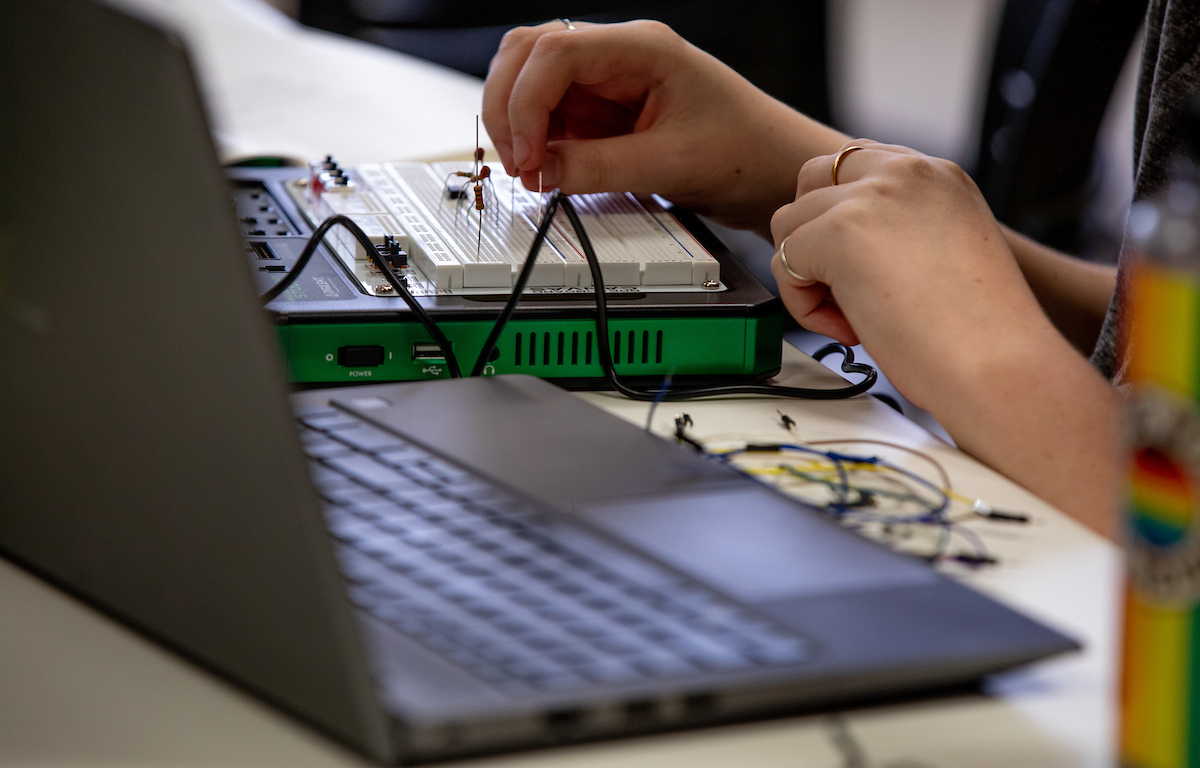
Courses are project-integrated so that theoretical engineering principles are reinforced and experienced through hands-on creation and problem-solving. Students take a wide variety of courses so they understand the fundamentals of circuits, sensors, networking, software, data science, computer architecture, and more.
This way students gain expertise across a wide variety of topics related to computing, and understand how they all relate to each other.
In addition, because Dunwoody is a technical college with both two- and four-year degrees, including majors related to electronics, manufacturing,and computers, , Computer Engineering students have access to many different kinds of relevant equipment, labs, and shops. That same access leads to opportunities for collaboration with students from other programs, both in cross-major courses and in extracurricular activities like the Autonomous Snowplow Team and the Baja Vehicles Club.
Bottom line: Computer Engineering offers a flexible, in-demand path to a future-forward career in technology, while providing a focused, hands-on engineering degree in a small college setting.