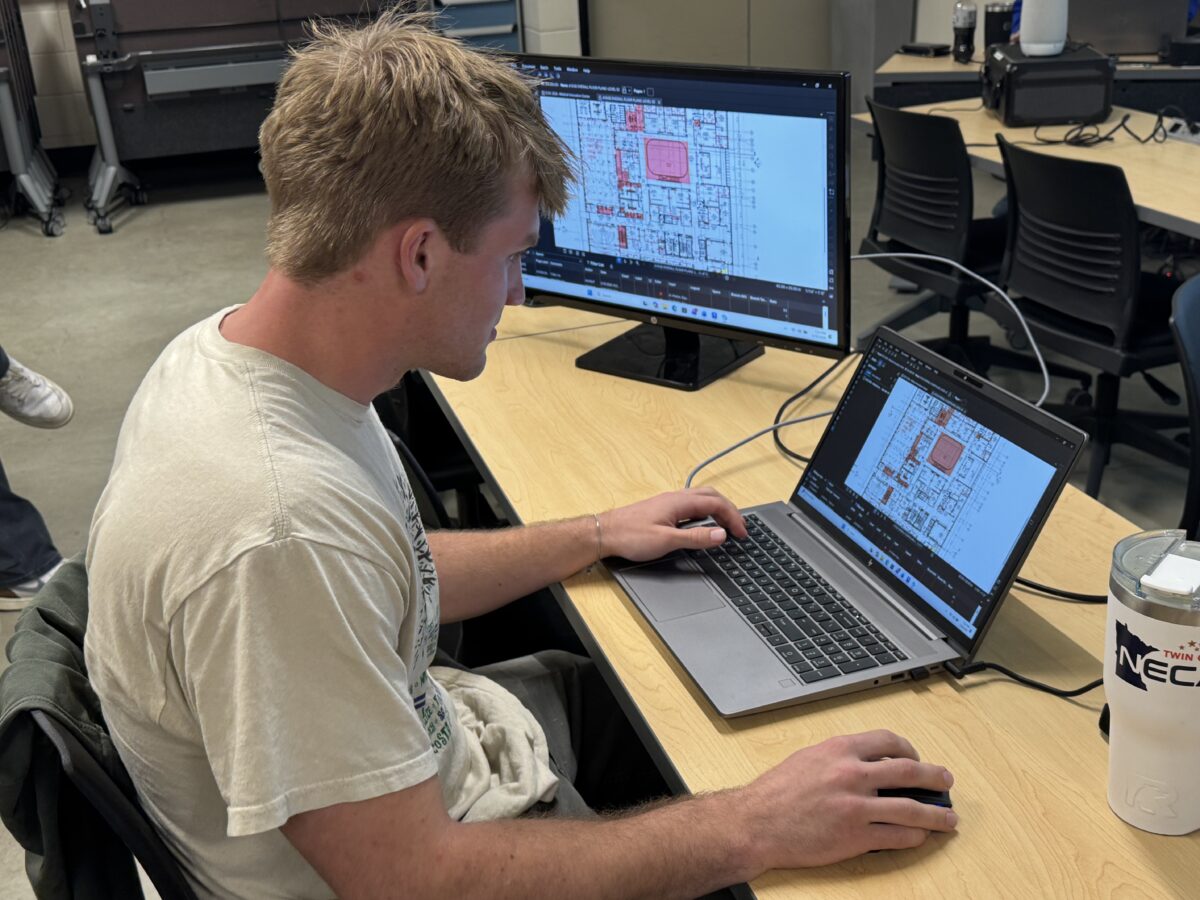
This year, a team of Dunwoody College of Technology students is competing in the 2026 Electrical Contracting Innovation Challenge, a national competition hosted by ELECTRI International and the National Electrical Contractors Association. The competition provides a real-world, project-based experience where students apply skills in electrical design, estimating, scheduling, and project management.
For the 2026 competition, teams are developing a full design-build electrical proposal for a University Medical Innovation Center. The project requires students to take a partial Revit model and build out a complete electrical system, while also producing a detailed estimate, construction schedule, prefabrication plan, and a change order based on a mid-project scope modification.
The Dunwoody team includes students in the Electrical Construction Design & Management program: August Hannasch, Phillip Jones, Maxwell Cordes, Jaxon Breen, Grant Haanpaa, Nathan Holdorf, Maxwell Jennings, Melinda Recker, Charles LeWin, and Grant Nieman. The team is advised by Associate Professor Polly Friendshuh, with additional support from industry partners.
Since the kickoff of the competition, the team has been working weekly to move the project forward. Early efforts focused on reviewing project documents, understanding the scope, and assigning roles. As the project progressed, the team transitioned into building their BIM model in Revit, developing lighting and power layouts, and beginning the estimating process using Bluebeam and Accubid.
To manage the workload, the team is divided into groups including design, estimating, scheduling, writing, and project management. This structure allows each group to focus on its responsibilities while staying coordinated with the rest of the team. Project Manager August Hannasch described project management as “juggling a lot at once, but with a strong team behind it, we’re confident we can knock this project out of the park.”
A major focus of this year’s challenge is combining multiple parts of a real construction project into one complete proposal. Students are coordinating BIM models, developing prefabrication strategies, and incorporating AI tools into their workflow to reflect how the industry is evolving. Design team member Grant Nieman explained that “working in Revit has been a big part of our progress, and as we continue building the model, we’re able to see how everything connects and catch issues early.”
The team has also been connecting with industry professionals to gain feedback and insight, helping them better understand how their decisions translate into real-world construction.
One of the biggest challenges so far has been coordination across different groups. Because design, estimating, and scheduling are all closely connected, even small changes can impact the entire project. However, through consistent communication and weekly meetings, the team has continued to stay organized and make progress.
In addition to technical work, the team has been actively sharing updates on LinkedIn, Instagram, and TikTok to document their progress and connect with others in the industry. The team’s social media efforts include weekly updates, behind-the-scenes looks at their workflow, and short-form educational content explaining different parts of the project. Maxwell Cordes added that “social media has been a great way for us to show what we’re working on each week and give people a real look into the process behind the project.”
Overall, the Electrical Contracting Innovation Challenge has provided the Dunwoody team with a hands-on opportunity to apply what they have learned in the classroom to a real project. As the deadline approaches, the team will continue refining their design, finalizing their estimate and schedule, and preparing a complete proposal for submission.
Follow the team’s progress on TikTok, Instagram, and LinkedIn.